Language

Temperature Control Exhaust Fan from Jienuo China is widely selected for controlled climate systems, especially in grow tents and hydroponic environments where airflow stability directly influences internal growing conditions. In these enclosed spaces, temperature and humidity can shift quickly due to lighting heat, plant transpiration, and limited natural ventilation. Once heat begins to accumulate, the entire microclimate can become unbalanced within a short time, affecting plant development cycles and system consistency. For this reason, ventilation is no longer treated as a background function but as a continuously responsive mechanism that helps regulate environmental equilibrium in real time.

Grow tents and hydroponic systems are intentionally designed to isolate plants from unstable external conditions. However, this controlled isolation also reduces natural air exchange, which leads to rapid heat and moisture buildup inside the enclosure.
Key internal pressure points:
- Heat accumulation from artificial lighting systems
- Moisture saturation from hydroponic nutrient evaporation
- Limited convection pathways
- Uneven temperature layering within enclosed zones
- Gradual CO₂ imbalance during closed cycles
These conditions often interact rather than occur independently, creating a layered environmental stress pattern that is difficult to correct without active ventilation control.
In enclosed cultivation environments, even small temperature fluctuations can influence plant metabolic behavior. Photosynthesis efficiency, nutrient uptake speed, and transpiration rates are all temperature-sensitive processes.
Hydroponic systems introduce another layer of sensitivity: water temperature stability. When ambient heat rises, nutrient solution temperatures increase as well, reducing dissolved oxygen levels and affecting root respiration balance.
A Temperature Control Exhaust Fan helps stabilize these shifts by responding dynamically to internal temperature changes instead of relying on fixed ventilation cycles.
Unlike conventional ventilation methods, temperature-responsive systems operate based on environmental feedback. This allows airflow adjustments to occur in alignment with actual thermal conditions inside the enclosure.
Functional comparison in practical use:
| Function aspect | Fixed ventilation | Temperature-responsive ventilation |
| Operation mode | Constant or manual | Automatic sensor-based adjustment |
| Energy behavior | Continuous usage | Demand-based operation |
| Heat response speed | Delayed correction | Real-time reaction |
| Climate stability | Moderate | Higher consistency |
| Air distribution | Uniform but static | Adaptive circulation |
This adaptive behavior is especially important in grow tents where heat sources cycle on and off throughout the day.
Grow tents and hydroponic setups have limited internal air volume, which makes them highly sensitive to environmental changes. Unlike open spaces, heat and humidity have fewer escape paths and tend to accumulate rapidly.
Typical environmental chain reaction:
- Lighting system activates → temperature rises
- Plant transpiration increases → humidity builds
- Water surfaces evaporate → vapor concentration grows
- Enclosure traps heat and moisture
- Microclimate imbalance develops
Without responsive ventilation, this cycle can repeat and intensify over time.
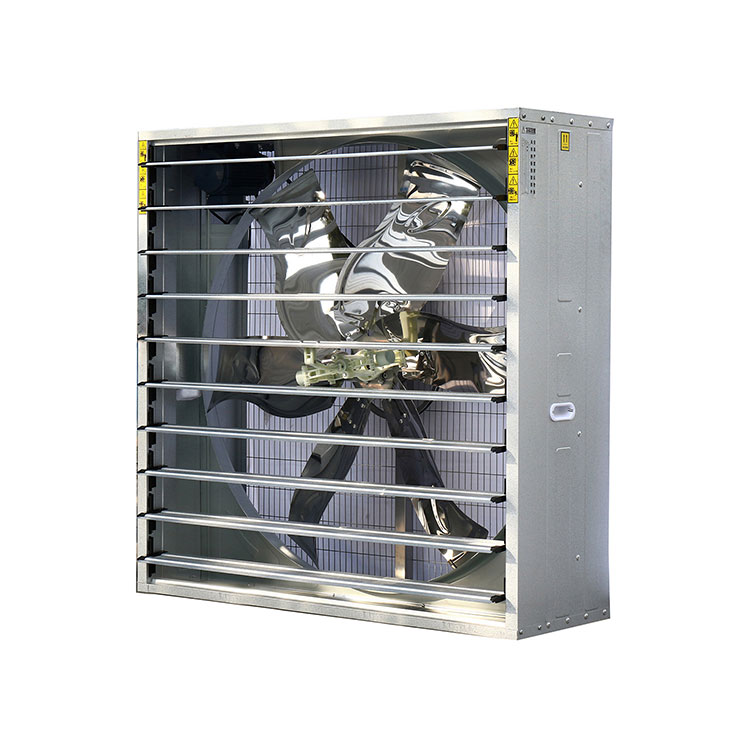
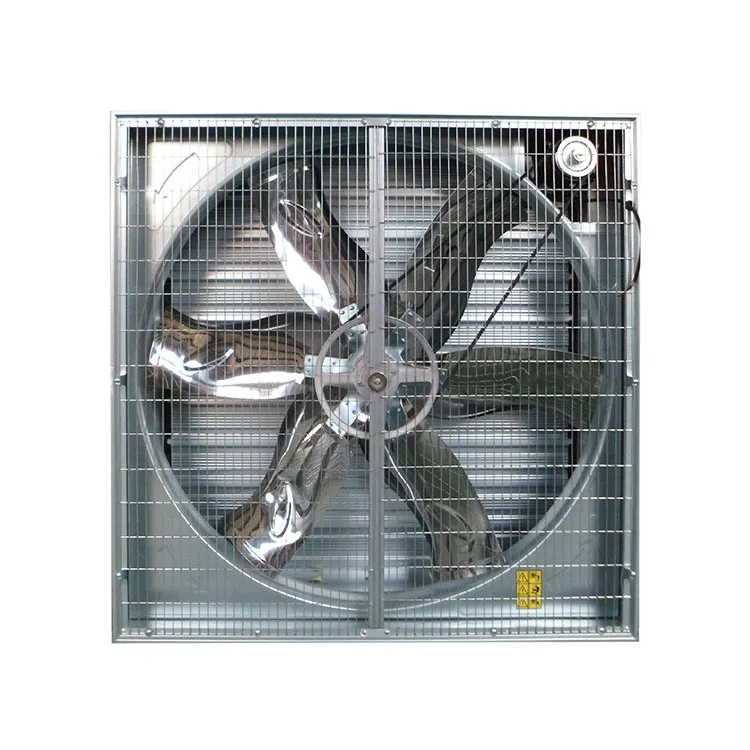
Modern ventilation design of Temperature Control Exhaust Fan focuses not only on airflow volume but also on system stability, material durability, and environmental responsiveness.
| Component | Purpose | Engineering feature |
| Frame structure | Stability support | Anti-corrosion zinc coating |
| Fan blades | Air movement | Aluminum alloy / stainless steel options |
| Shutter system | Air protection | Windproof and dust-resistant design |
| Sensor unit | Temperature monitoring | Continuous real-time detection |
| Motor system | Operational safety | Phase protection mechanism |
Shandong Jienuo Thermostat Equipment Co., Ltd. integrates these design principles into its ventilation systems to support long-term operation in humid and thermally dynamic environments.
One important advantage of temperature-responsive ventilation is its ability to reduce unnecessary operation cycles. Instead of running continuously, airflow is activated only when internal temperature exceeds preset conditions.
This approach supports more stable environmental regulation, particularly in cultivation systems where heat generation is irregular due to lighting schedules and plant growth stages.
Temperature-responsive ventilation systems are used across multiple controlled environments where climate stability is essential.
| Environment | Main challenge | Ventilation role |
| Grow tents | Rapid heat spikes | Temperature stabilization |
| Hydroponic racks | High humidity levels | Moisture control |
| Greenhouse zones | Uneven airflow | Air circulation balance |
| Indoor plant labs | Sensitive conditions | Precision climate control |
In each case, airflow control is tied directly to maintaining environmental consistency rather than simply removing warm air.
Controlled cultivation environments often experience frequent transitions, such as lighting cycles switching on and off or irrigation systems increasing humidity levels. These changes require ventilation systems that can respond without delay.
A Temperature Control Exhaust Fan continuously monitors temperature variations and adjusts airflow output accordingly, helping reduce lag between environmental change and system response.
Since enclosed cultivation systems often operate continuously, ventilation equipment must withstand long operational cycles under humid and warm conditions. Structural corrosion resistance and stable motor performance are essential for maintaining consistent airflow behavior over time.
Shandong Jienuo Thermostat Equipment Co., Ltd. applies reinforced manufacturing processes and protective surface treatments designed to maintain performance stability in moisture-rich and heat-variable environments.
As controlled environment agriculture continues to develop, ventilation systems are increasingly expected to respond intelligently rather than operate passively. This shift reflects a broader move toward environmental automation, where airflow, temperature, and humidity are managed as interconnected variables.
Within this evolving framework, temperature-responsive ventilation plays a central role in maintaining equilibrium across different cultivation stages.
Grow tents and hydroponic systems depend heavily on stable internal climate conditions, where even minor airflow imbalances can affect overall system performance. Responsive ventilation helps address these challenges by adjusting airflow according to real-time temperature conditions rather than fixed operation patterns.
Shandong Jienuo Thermostat Equipment Co., Ltd. and its Jienuo JFD-HE exhaust fan reflect this approach in practical applications, where the Temperature Control Exhaust Fan contributes to maintaining balanced environmental conditions across enclosed cultivation systems.