Language

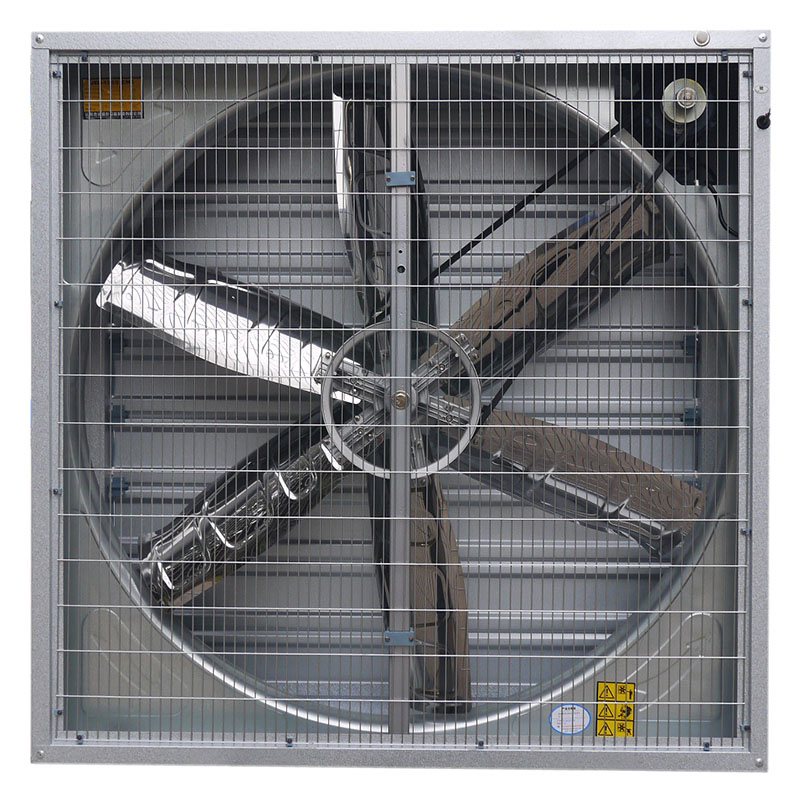
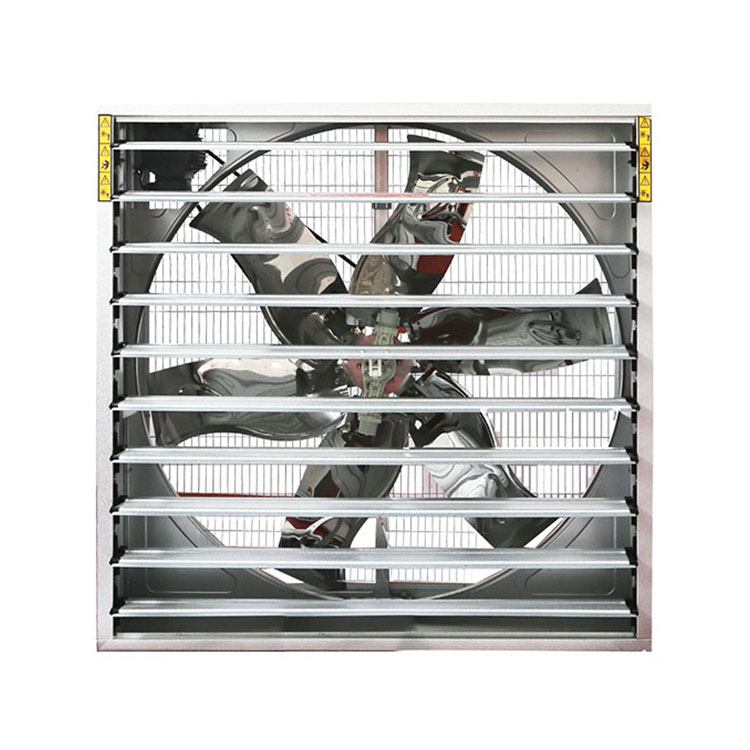
The growing focus on energy costs is putting the Industrial Centrifugal Exhaust Fan under closer attention in 2026, especially in factories, agricultural buildings, and large ventilation systems where fans operate for long hours.
Industrial ventilation has traditionally focused on one basic question: how much air can a fan move? That question is still important, but it is no longer enough. When a ventilation fan runs eight, twelve, or even twenty-four hours a day, the electricity used by the motor can become a significant part of operating costs. This has changed how ventilation systems are evaluated.
Instead of choosing equipment based only on maximum airflow, facility operators are increasingly looking at airflow demand, static pressure, motor efficiency, operating hours, control methods, and maintenance requirements together.
A fan does not necessarily need to operate at full capacity all day. In many industrial and agricultural environments, ventilation requirements change throughout the day.
A greenhouse may require strong air exchange during a hot afternoon but much less airflow in the early morning. A workshop may have different ventilation requirements during production and idle periods. Livestock buildings can also experience substantial changes in temperature and air quality.
Running a fan at full speed when only part of its capacity is required wastes electricity.
This is one reason energy-efficient fan systems are receiving more attention. The goal is not simply to install a fan with a more efficient motor. The entire operating pattern needs to be considered.
| Factor | Conventional Selection | Current Selection Trend |
|---|---|---|
| Airflow | Maximum rated airflow | Required operating airflow |
| Motor operation | Fixed-speed running | Adjustable-speed operation |
| Energy use | Considered after installation | Considered during selection |
| Control | Manual switching | Automatic or variable control |
| Maintenance | Reactive maintenance | Planned inspection |
| Fan sizing | Oversized for safety margin | Closer to actual system demand |
The difference can be significant when equipment operates continuously.
Industrial ventilation is not always about moving air through an open space. Air often has to travel through ducts, filters, louvers, heat exchangers, or other components that create resistance.
This is where centrifugal fan construction becomes relevant.
A centrifugal fan draws air into the impeller and changes the direction of airflow before discharging it. This operating principle allows the fan to generate the pressure needed for systems where airflow resistance is higher than that found in simple open-space ventilation.
The Industrial Centrifugal Exhaust Fan is therefore being considered for applications where both airflow and pressure performance matter.
However, higher pressure capability does not automatically mean lower energy consumption. A fan that is too large for the actual system can still consume unnecessary power. Proper matching between the fan, duct system, motor, and control method remains important.
Variable speed control is another reason energy efficiency has become a bigger topic in 2026.
With a fixed-speed fan, reducing airflow often means switching the equipment off or using mechanical methods to restrict airflow. Neither approach is ideal when ventilation demand changes frequently.
Variable frequency drives, commonly known as VFDs, provide another option. They allow motor speed to change according to ventilation requirements.
For example, a ventilation system could operate at a lower speed during periods of moderate temperature and increase speed when heat or humidity rises.
This approach can reduce unnecessary full-speed operation, but the control strategy matters. Simply adding a VFD does not automatically make a ventilation system efficient. The control range, motor compatibility, pressure requirements, and operating point all need to be considered.
Smart ventilation does not necessarily mean a complicated digital system. In many facilities, basic automatic control can already make a noticeable difference.
Temperature sensors, humidity sensors, pressure monitoring, and fan control boxes can be connected to ventilation equipment to adjust operation according to actual conditions.
For agricultural applications, this can be particularly useful because environmental conditions can change quickly. A greenhouse, for example, may need different ventilation levels depending on outdoor temperature, sunlight, and internal humidity.
The same principle applies to industrial buildings. If heat-producing equipment is operating only during certain production periods, ventilation demand may also change.
The key shift is from continuous operation to demand-based operation.
One common mistake is to judge fan efficiency by the motor alone.
A highly efficient motor cannot compensate for a poorly designed ventilation system. If ducts are unnecessarily long, bends are excessive, filters are blocked, or air inlets are poorly positioned, the fan must work against additional resistance.
This means energy efficiency should be considered at the system level.
Static pressure is one of the most important factors when selecting a centrifugal exhaust fan. If the required pressure is underestimated, the actual airflow may be lower than expected. If the fan is significantly oversized, energy consumption may increase without providing useful additional ventilation.
Exhaust equipment works as part of an air movement system. Air needs a suitable path into the building before it can be removed.
For agricultural buildings, properly arranged air inlets can help reduce dead zones and improve air distribution. This is why exhaust fans, air inlets, circulation fans, and airflow windows are increasingly considered together rather than as completely independent products.
Dust, dirt, worn belts, blocked filters, and damaged components can gradually affect fan performance.
A fan may continue operating even when its efficiency has deteriorated. This makes maintenance particularly important for equipment that runs for long periods.
Regular inspection can focus on several practical points:
Unexpected vibration or noise can also indicate mechanical problems. Identifying these changes early can prevent a small maintenance issue from becoming a larger equipment failure.
Oversizing has long been used as a simple way to avoid insufficient ventilation. But this approach can create another problem.
A fan with much higher capacity than the system requires may consume more electricity while operating below its intended working point. Undersizing creates the opposite problem: insufficient airflow and continuous operation at high load.
The better approach is to determine the actual ventilation requirement first.
Important selection information can include:
| Selection Parameter | Why It Matters |
|---|---|
| Required airflow | Determines the amount of air that needs to be removed |
| Static pressure | Indicates system resistance |
| Operating hours | Helps estimate energy consumption |
| Motor power | Influences electrical demand |
| Control method | Determines how easily airflow can be adjusted |
| Installation environment | Affects material and maintenance requirements |
This approach is more useful than comparing rated airflow figures alone.
Several factors are pushing industrial ventilation toward more efficient operation.
First, electricity costs remain an important operating concern for facilities with long equipment running times. Second, automated environmental control is becoming more common in agriculture and industrial buildings. Third, energy-efficiency requirements are encouraging closer examination of equipment performance.
There is also a practical reason for the shift: modern facilities are becoming more automated, while ventilation systems often remain one of the largest continuous electrical loads. Improving fan operation can therefore be part of a wider energy-management strategy.
The trend does not mean that every facility needs a complex smart ventilation platform. In many cases, better fan sizing, appropriate motor selection, variable-speed control, and routine maintenance can address the main sources of unnecessary energy use.
The growing interest in energy-efficient ventilation in 2026 reflects a broader change in industrial equipment selection. Performance is increasingly being judged by how efficiently equipment performs its actual job rather than by maximum capacity alone.
For an Industrial Centrifugal Exhaust Fan, this means airflow, static pressure, motor performance, control method, operating hours, and system resistance need to be considered together.
The same principle applies to greenhouse ventilation and agricultural climate control. Exhaust fans, circulation fans, air inlets, and hot air generators need to work according to the environmental conditions instead of operating independently at fixed levels.
Energy efficiency is therefore becoming less about a single component and more about how the complete ventilation system operates.
As this trend develops, the Industrial Centrifugal Exhaust Fan will remain part of the wider shift toward demand-based ventilation, practical automation, and lower unnecessary energy consumption. For Jienuo, established in 2001 with production facilities covering 30,000 square meters and a product range covering exhaust fans, circulation fans, airflow windows, and hot air generators, this industry shift connects directly with the changing requirements of modern ventilation systems.